
XXL Jackpot Competition Winners: Hall of Fame
December 25, 202590 Jili Slots: Top Rated Games Review
December 26, 2025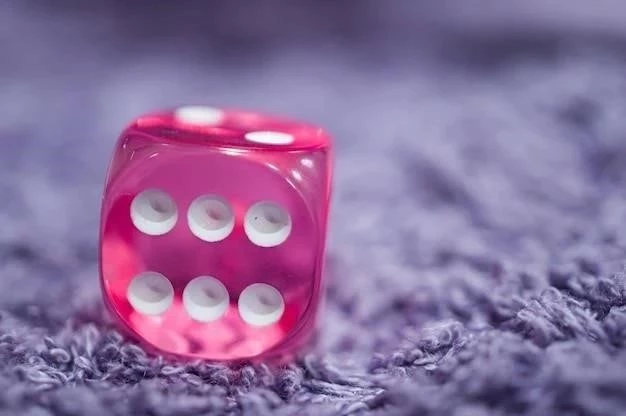
Craps is a casino game renowned for its fast pace‚ exciting atmosphere‚ and the fundamental role probability plays in every dice roll. Far from pure chance‚ understanding the underlying probability distributions is key to appreciating its mechanics and making informed betting decisions. This article explores the statistical “physics” of craps‚ detailing how the seemingly random toss of two dice generates predictable outcomes over time.
The Mechanics of Dice Rolls
At the heart of craps are two standard six-sided dice‚ each face numbered 1 to 6. When rolled‚ there are 6 possible outcomes for each die‚ resulting in a total of 6 x 6 = 36 unique combinations. While each individual combination (e.g.‚ 1+1‚ 1+2) has an equal 1/36 chance‚ the sum does not.
Understanding the Sums and Their Probabilities
Sums range from 2 (1+1) to 12 (6+6). The number of ways to achieve each sum is crucial for craps probabilities:
- Sum 2: 1 way (1/36)
- Sum 3: 2 ways (2/36)
- Sum 4: 3 ways (3/36)
- Sum 5: 4 ways (4/36)
- Sum 6: 5 ways (5/36)
- Sum 7: 6 ways (6/36)
- Sum 8: 5 ways (5/36)
- Sum 9: 4 ways (4/36)
- Sum 10: 3 ways (3/36)
- Sum 11: 2 ways (2/36)
- Sum 12: 1 way (1/36)
The sum of 7 is the most probable outcome‚ occurring 6 times out of 36 rolls (1 in 6). This central tendency around 7 dictates much of craps strategy and house edge.
Probability in Key Craps Bets
Different craps bets leverage these probability distributions:
Pass Line Bet
Fundamental bet. On the “come-out” roll:
- A 7 or 11 wins instantly (8/36 probability).
- A 2‚ 3‚ or 12 loses instantly (4/36 probability).
- Any other number (4‚ 5‚ 6‚ 8‚ 9‚ 10) becomes the “point.” Shooter must roll the point again before a 7 for the Pass Line bet to win.
The house edge is approximately 1.41%‚ derived from the slightly higher probability of losing outcomes (craps or 7-out after point) compared to winning outcomes.
Don’t Pass Line Bet
Inverse of Pass Line. On come-out roll:
- A 2 or 3 wins (3/36).
- A 7 or 11 loses (8/36).
- A 12 is a push (“bar 12” rule; 1/36).
- Any other number becomes the point. Wins if a 7 is rolled before the point.
House edge is slightly lower at approximately 1.36%‚ mainly due to the “bar 12” rule.
Odds Bets – The Best Bet
Once a point is established‚ players can make an “Odds Bet.” This is unique because it has no house edge. Payouts are true odds‚ reflecting the exact probability of hitting point before a 7. For example‚ if the point is 4‚ there are 3 ways to roll a 4 vs. 6 ways for a 7; True odds are 2:1‚ and the casino pays 2:1. Players are encouraged to take maximum odds.
Place Bets
Bets on specific numbers (4‚ 5‚ 6‚ 8‚ 9‚ 10) after come-out. Win if your number is rolled before a 7. Payouts are less than true odds‚ creating the house edge:
- 6 or 8: True odds 6:5. Payout 7:6. House edge ~1.52%.
- 5 or 9: True odds 3:2. Payout 7:5. House edge ~4.00%.
- 4 or 10: True odds 2:1. Payout 9:5. House edge ~6.67%.
Proposition Bets
One-roll bets in the center (e.g.‚ “Any Craps‚” “Any 7‚” “Hardways”). These have significantly higher house edges (often 10%+)‚ due to low probabilities and disproportionate payouts‚ making them generally unfavorable.
The House Edge and Probability
The casino’s advantage‚ or house edge‚ is mathematically engineered into payout ratios. While every roll is random‚ consistent application of these probability distributions over countless rolls ensures casino profits long-term. The house edge is the difference between true odds and offered payout odds.
The “Physics” of Randomness
The “physics” in Craps Physics refers to the inherent‚ reproducible statistical behavior of random events. Fair dice‚ rolled without manipulation‚ will always produce these probability distributions. This statistical regularity is a cornerstone of probability theory‚ forming craps’ immutable bedrock. The randomness of each individual roll is a micro-event‚ but the aggregate of many rolls forms a macro-pattern aligning perfectly with predicted probabilities.
Short-Term Variability vs. Long-Term Trends
While probability dictates long-term outcomes‚ short-term results are highly variable. Players might experience lucky or unlucky streaks. However‚ the Law of Large Numbers ensures that as rolls increase‚ observed frequencies converge towards theoretical probabilities‚ reinforcing the house edge.
Craps is a masterclass in applied probability. From rolling two dice‚ a rich tapestry of probability distributions emerges‚ defining odds for every sum and influencing every bet. Understanding these distributions‚ especially the centrality of seven‚ empowers players to make strategic choices‚ distinguish favorable/unfavorable bets‚ and appreciate the elegant mathematical foundation of this dynamic casino classic.